
Cache County Court Records After Arrest
The court-record pathway in Cache County is separate from the jail roster. Cache County Jail creates the booking and custody record after an arrest. The Cache County Attorney's Office, a city prosecutor, or another prosecuting authority then decides what charges to file. Once a case is filed, the Utah court record can show party names, assigned judge, attorneys, documents, hearings, judgments, and case outcome when the record is public.
The Cache County Attorney's Office says it prosecutes public offenses committed in the county, including felony and misdemeanor matters when the evidence supports filing. Its Criminal Division handles cases in First District Court and in Hyrum, Logan, and Nibley justice courts. That means a Cache County arrest can lead to more than one court path. Felonies and many serious misdemeanors usually route through the First District Court in Logan, while lower-level city matters may route to a justice court.
Custody and court status should not be merged. For jail custody and booking detail, use Cache County jail inmate records. For booking-photo limits, use Cache County jail mugshots. Court records after a jail arrest answer a different question: what charge was filed, whether it changed, what bond or release terms apply, and how the case ended.
Find Cache County Court Records
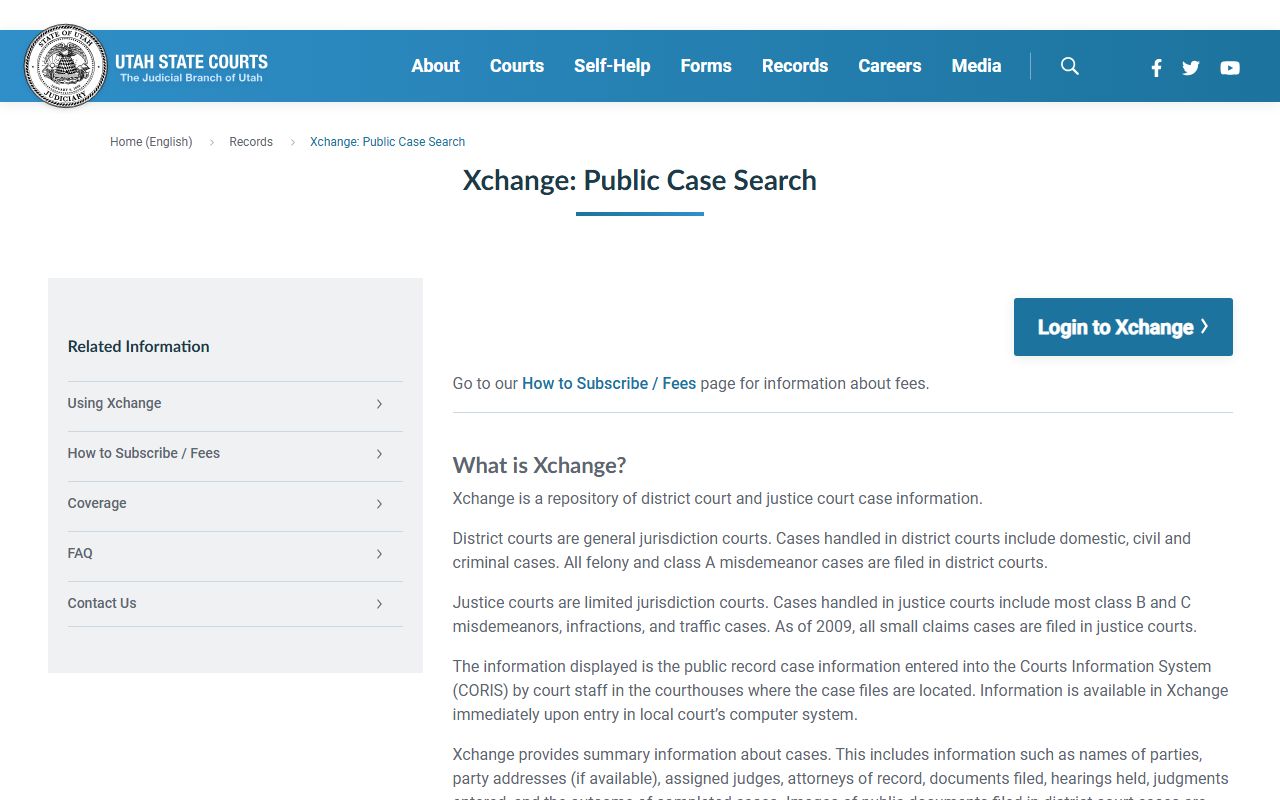
Utah Courts Xchange is the main public case-search channel for filed Cache County court records after an arrest. The Utah Courts Xchange information page says Xchange provides public case-summary information for district and justice courts, and that district-court document images may be purchased. The Xchange portal is separate from the jail page, so a missing jail roster result does not decide whether a court case exists.
The Utah Courts Xchange page is a useful match for this court-records topic. Its public description connects party names, filed documents, hearings, judgments, and outcomes to court case lookup.
Use Xchange for the filed case, then compare the court charge with any jail booking information. The two may differ because prosecutors review reports, witnesses, lab results, and legal elements before filing or amending charges.
| Search path | What it can show | Cache County use |
|---|---|---|
| Party name | Public case matches by name when available. | Useful when no case number is known after arrest. |
| Case number | Specific case file and event history. | Best once a clerk, attorney, citation, or notice gives the number. |
| Court type | District and justice court case coverage. | Use First District Court or the city justice court tied to the incident. |
| Documents | Public district-court document images may be purchased. | Use for charging papers and orders when public and available. |
Cache County Arrest Court Lookup
A careful lookup starts with custody, then moves to court. Cache County's jail page says the current inmate list and last-30-days booking list are currently unavailable and directs booked-inmate questions to the jail phone line. That makes the court search more important, but it does not replace custody confirmation.
- Confirm whether the person was booked by calling Cache County Jail at (435) 755-1227, since the public roster is unavailable.
- Identify the likely court. First District Court handles Cache County district matters; city justice courts may handle class B or class C misdemeanors and infractions.
- Search Xchange by name or case number. Review the court, charge list, hearings, filed papers, judgment entries, and outcome fields.
- If you are a party, use Utah MyCourtCase for access to your own case history, filed papers, payments, and linked cases.
- For sealed, restricted, juvenile, older, or non-indexed records, contact the court clerk rather than assuming the arrest produced no case.
The First District Court Logan courthouse is listed at 135 N 100 W, Logan, UT 84321, with court information at (435) 750-1300. Utah Courts identifies the First Judicial District as covering Cache, Box Elder, and Rich counties. Local justice court routing depends on the city and charge level, so Hyrum, Logan, Nibley, Providence, Wellsville, North Logan, Hyde Park, and Smithfield matters may need court-specific checking.
Note: A court case may lag behind booking because reports and charging decisions must be reviewed before filing.
Cache County Charging Records
Formal court records after a jail arrest start with a charging document. A booking charge is an intake allegation. A court charge is the filed allegation that the court tracks. Cache County prosecutors may file, amend, reduce, or dismiss charges as the case develops. That is why a jail booking label should not be treated as the final court record.
| Document | Who files or returns it | How it fits the case |
|---|---|---|
| Complaint | Prosecutor or authorized filing party | Often starts a criminal case and states the alleged offense. |
| Information | Prosecutor | Common charging document in felony practice after prosecutor review. |
| Indictment | Grand jury | Returned by a grand jury in cases using that process. |
Cache County Attorney materials say prosecutors coordinate with law enforcement on investigations, criminal investigative subpoenas, search warrants, and court evidence. The Criminal Division also lists specialized work involving domestic violence, child abuse, drug-related offenses, juvenile crimes, fraud, and crimes involving people with mental-health diagnoses.
Cache County Charge Status
Charge status is the part of a court record that shows where a charge stands. A pending charge is not a conviction. An amended charge may use a different statute, degree, or description than the booking entry. A dismissed charge ended without a conviction on that count. A conviction requires a plea, verdict, or other final finding of guilt.
| Status term | Plain meaning | Why it matters after arrest |
|---|---|---|
| Pending | The filed case or charge is not finally resolved. | Hearings, bond conditions, and orders may still change. |
| Amended | The prosecutor changed the charge. | The court record may no longer match the jail booking wording. |
| Reduced | The charge level or offense was lowered. | This can occur through plea negotiation, review, or court action. |
| Dismissed | The charge was terminated without conviction. | Do not describe a dismissed charge as guilt. |
| Conviction | A final finding or admission of guilt. | This is different from arrest, booking, or accusation. |
Cache County Bond Records After Arrest
Bond and release information after a Cache County arrest should be verified through both court and jail channels. Cache County Jail links to online bail payment through GovPayNet and accepts major credit, debit, and prepaid debit cards through that channel when payment is allowed. The court controls many release terms, and a no-bond hold, another-agency hold, state status, federal status, or immigration status can stop release even when a local payment is made.
| Release term | How it works | Where to verify |
|---|---|---|
| Cash bond | Money paid to secure release and future court appearance. | Confirm amount with the court or jail before payment. |
| Surety bond | A licensed bail agent posts bond if the court permits it. | Check whether surety is allowed for the charge or hold. |
| Personal recognizance | Release on a promise to appear without posting full cash bond. | Set by the court, not guaranteed by the jail. |
| No-bond hold | Release is blocked until a judge or holding agency changes the status. | Ask the court and the agency that placed the hold. |
| Other-agency hold | Another county, UDC, federal, immigration, parole, or probation hold may apply. | Use the correct agency locator and court record. |
Cache County's Sheriff's Office warns that scammers may pose as the Sheriff's Office, demand payment, and claim a warrant will issue or an arrest will occur. The Sheriff's Office says it will never request warrant payment over the phone and will never ask for gift cards. Verify warrant or bond claims through the Sheriff's Office at (435) 755-1000 or the court.
Cache County Warrant Records
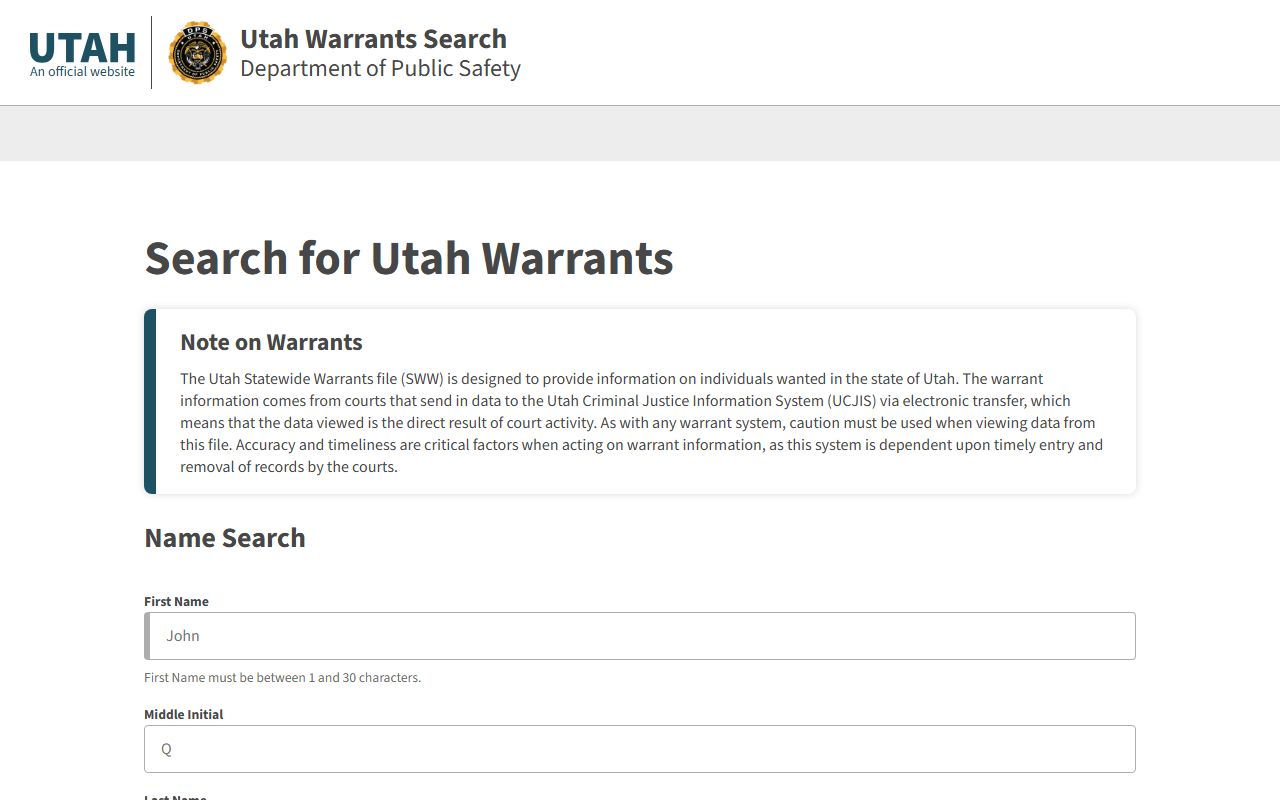
A warrant can be the reason a Cache County arrest occurs, but warrant lookup is not the same as court case lookup. The official online warrant channel is the Utah Statewide Warrants Search. The Utah Bureau of Criminal Identification warrant page describes it as a free search of the Utah Statewide Warrants file.
The Statewide Warrants Search portal is the matched official source for warrant lookup. It should be used with local verification because a warrant can lead to arrest.
For Cache County, the safe path is to verify with the Sheriff's Office or the issuing court before taking action. A bench warrant may relate to a missed hearing or payment issue. An arrest warrant authorizes custody. A search warrant is different and does not work as a public arrest-status list.
Cache County Court Charges vs Convictions
Utah court records can show accusations, case events, and outcomes. The meaning changes by stage. A person can be booked, charged, and released without a conviction. A person can also have one charge dismissed while another charge remains pending or results in a plea. Read each count separately.
| Question | Charge | Conviction |
|---|---|---|
| What is it? | A filed accusation in court. | A final guilt finding or plea on a count. |
| When does it appear? | After filing, if public and indexed. | After plea, verdict, or final court action. |
| Can it change? | Yes, it may be amended, reduced, or dismissed. | It can be appealed, set aside, or later restricted only through legal process. |
| How to describe it? | Use accused, charged, or pending. | Use convicted only when the record shows conviction. |
Cache County Sealed Court Records
Some court records after an arrest are not open to general public search. Utah's Government Records Access and Management Act, or GRAMA, classifies government records and permits restrictions for private, protected, controlled, sealed, juvenile, and other limited records. Court sealing and expungement are legal processes. A missing Xchange result can mean no case was filed, a search mismatch, a restricted record, or a case outside the visible index.
| Record type | Public visibility | Best next step |
|---|---|---|
| Sealed | Hidden from ordinary public access by court order or rule. | Ask the court clerk about access rules if you are a party or authorized person. |
| Expunged | Restricted through Utah expungement process when eligible. | Use Utah court self-help or legal counsel for eligibility and filing steps. |
| Juvenile | Often restricted more tightly than adult records. | Contact the juvenile court or counsel for party-specific access. |
| Active investigative record | May be withheld or redacted under GRAMA. | Use the Sheriff's Records Department and expect review before release. |
Important: This privately operated resource is not a consumer reporting agency, and its information must not be used for FCRA-covered screening.
Cache County Record Access Laws
GRAMA controls requests to Utah government entities, including Cache County Sheriff's Office records. Cache County says records requests are processed as soon as reasonably possible but may take up to 10 working days. Some records may be protected, private, or controlled under GRAMA. The Sheriff's Office official record controls when web information conflicts with office records.
Utah Code 17-22-30 is relevant when a request involves booking photographs, but court records after a jail arrest are not a mugshot gallery. Utah Courts criminal penalty materials explain felony and misdemeanor levels, including the possible jail terms for misdemeanor classes. For death-in-custody or jail-standard context, Utah Code 17-72-408, Utah Code 64-13-25, and UDC correctional standards may also matter, but those sources do not replace the court docket for a specific charge.